
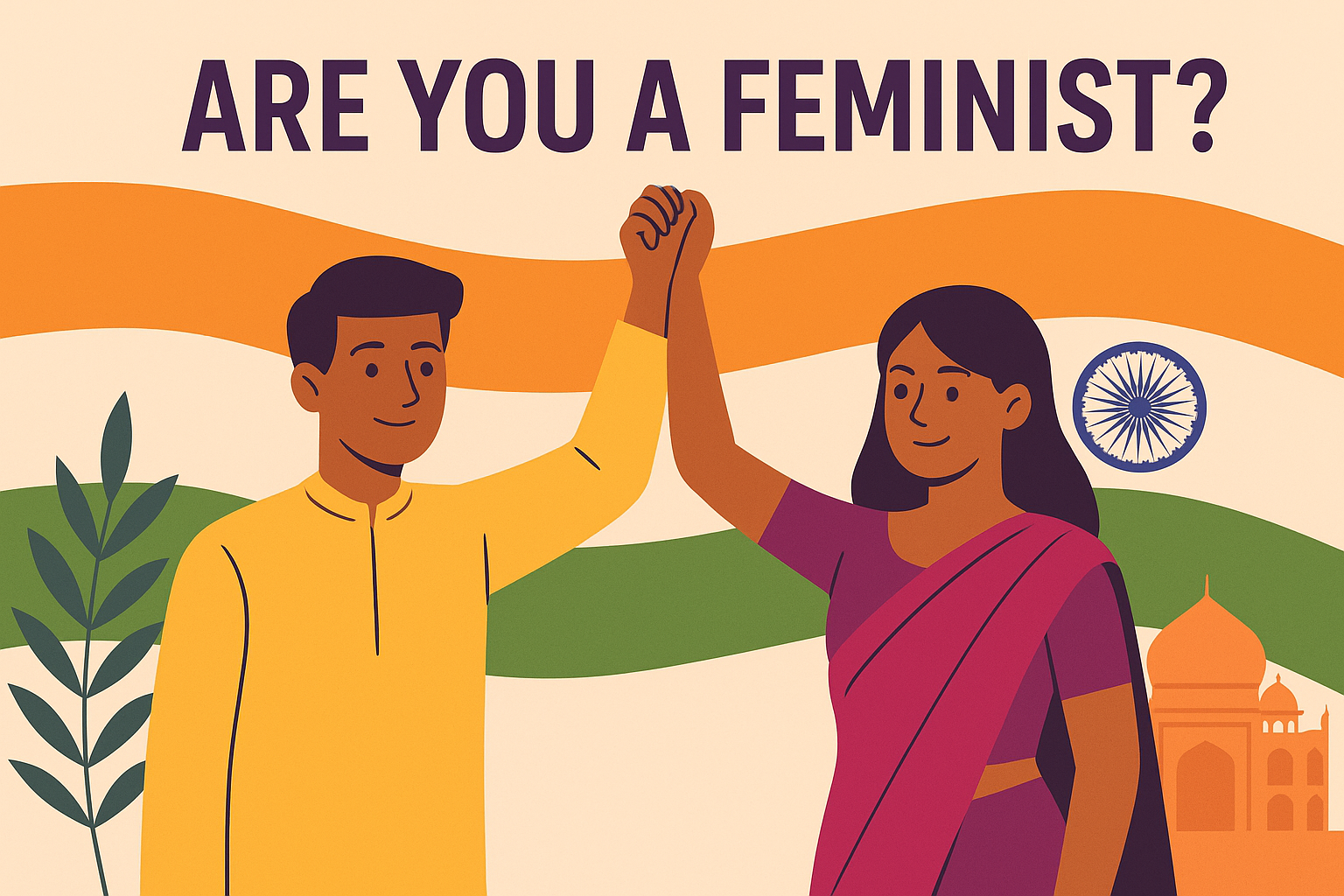
Understanding Feminism in India: Equality, Misconceptions, and Realities
Feminism is a word we hear a lot these days, but many people still do not understand what it truly means. In simple terms, feminism is the belief that women and men should have equal rights and opportunities—whether at home, in the workplace, or in society. It is about challenging unfair rules, traditions, and practices that limit women’s freedom and potential.
Even in India, a country with a rich cultural heritage, patriarchy h Feminism is one of the most talked-about ideas in today’s world, but it’s also one of the most misunderstood. What does it really mean to be a feminist? And can both men and women be feminists? The simple answer is yes.
Feminism is not about women being superior to men. It’s about fairness, respect, and the belief that everyone should have equal rights and opportunities, no matter their gender. In India, a country rich in culture and tradition, feminism plays an important role in breaking stereotypes and creating balance in society.
What Feminism Really Means
At its heart, feminism is about equality in every aspect of life social, political, and economic. It is not against men, nor is it about reversing power. It’s about ensuring that both genders can make choices freely and live with dignity.
In India, feminism means challenging outdated practices that limit women’s growth, like denying girls education or expecting women to sacrifice their careers for family life. It also means giving men the space to express emotions, share household responsibilities, and reject the idea that masculinity means dominance or silence.
Main Aspects of Feminism in India
- Legal Equality: Women today can vote, own property, work in any profession, and file complaints against harassment or abuse.
- Social Empowerment: Feminism questions traditional roles that confine women to the home.
- Economic Freedom: It encourages women to build financial independence through jobs and entrepreneurship.
- Emotional Balance: It allows men to break free from stereotypes like “real men don’t cry.”
Feminism is not a war between genders. It is a bridge that connects them through equality.
The Waves of Feminism in India
Feminism in India has evolved over time. It has grown through different eras, each shaped by its social and political context.
1. The Pre-Independence Era
Leaders like Sarojini Naidu, Savitribai Phule, and Kasturba Gandhi stood up for women’s education and participation in the freedom struggle. Their voices sparked the beginning of women’s empowerment in India.
2. Post-Independence (1950s–1980s)
After independence, India took strong legal steps to ensure women’s rights. Laws like the Hindu Succession Act (1956) gave women property rights, and the Dowry Prohibition Act (1961) aimed to end dowry-related abuse. Social activists also started raising awareness about domestic violence and workplace discrimination.
3. The 1990s to 2010s
This period saw louder and more visible feminist movements. Discussions about sexual harassment, equal pay, and women’s safety became central. The Protection of Women from Domestic Violence Act (2005) was a key step toward gender justice.
4. Modern Feminism (2010s–Present)
Today’s feminism includes everyone—urban, rural, working-class, and marginalized women. Movements like #MeToo India, Pinjra Tod, and campaigns for menstrual hygiene show how feminism is part of daily life and public debate.
Why Some People Misunderstand Feminism
Even now, many people in India oppose or misunderstand feminism. Here are some common reasons:
1. Fear of Losing Control
In many families, men have traditionally held power. When feminism talks about equal decision-making, some see it as a threat to their role or authority.
2. Confusing Feminism with Man-Hating
Feminism is often wrongly equated with misandry (hatred of men). But the two are completely different. Feminism challenges unfair systems, not men themselves.
3. Cultural and Religious Resistance
India’s cultural diversity means some traditions expect women to marry early, stay home, or prioritize family over personal goals. Feminism questions these ideas, which can make some people uncomfortable.
4. Social Media Misrepresentation
Online, a few extreme opinions or viral posts often distort the meaning of feminism. This causes unnecessary conflict and reinforces negative stereotypes.
Feminism vs. Misandry: Clearing the Confusion
It’s important to remember that feminism and misandry are not the same.
- Feminism stands for equality between all genders.
- Misandry means dislike or prejudice against men.
Feminism benefits everyone. Women gain freedom and opportunity, while men are freed from unrealistic expectations about strength and emotional control.
When both men and women are allowed to live authentically, relationships and societies become healthier and more balanced.
Feminism in Everyday Indian Life
In India, the spirit of feminism can be seen in small but powerful ways every day.
1. Education
Campaigns like Beti Bachao Beti Padhao have helped improve girls’ access to education. As of 2021, India’s female literacy rate reached around 70%, compared to just 40% a few decades ago.
2. The Workplace
Indian women are now leading in business, politics, sports, and science. Examples include:
- Kiran Mazumdar-Shaw, founder of Biocon.
- Nirmala Sitharaman, India’s first full-time female Finance Minister.
- PV Sindhu, Olympic medalist and role model for millions.
3. Safety and Awareness
Laws like the Nirbhaya Act (2013) and POSH Act (2013) were created to protect women’s rights and ensure safer workplaces.
4. Social Movements
From #MeToo to campaigns against dowry deaths and gender-based violence, Indian women and men are coming together to demand equality and justice.
How Feminism Benefits Men Too
Many forget that feminism is also good for men.
- Freedom to Feel: Men can express emotions like sadness, love, or vulnerability without being judged.
- Career Flexibility: Men can pursue careers in teaching, nursing, or art without being mocked.
- Shared Family Roles: Feminism promotes shared parenting and domestic equality.
- Better Relationships: Equality builds stronger, more respectful partnerships.
When men support feminism, they don’t lose power. They gain freedom and peace of mind.
Challenges Feminism Still Faces in India
Despite progress, feminism in India still faces serious challenges.
- Women continue to face a gender pay gap in many industries.
- Domestic violence and sexual harassment remain common issues.
- Women’s participation in politics and leadership is still lower than men’s.
- Patriarchal beliefs and social conditioning persist, especially in rural areas.
Real change requires education, empathy, and collaboration between all genders.
How You Can Support Feminism
- Educate Yourself: Learn about women’s rights and gender issues in India.
- Speak Up: Don’t ignore sexist jokes or unfair treatment.
- Encourage Equality: Support equal opportunities in your home, workplace, and community.
- Support Laws and Policies: Promote awareness about laws that protect women and encourage inclusion.
- Be Open to Conversations: Respectful dialogue can clear misconceptions and inspire others to act.
Conclusion: A Shared Journey Toward Equality
Feminism in India is not just about women’s rights. It’s about everyone’s right to live freely and fairly. It invites both men and women to question outdated traditions and replace them with understanding and respect.
Being a feminist doesn’t mean rejecting culture. It means making it better. It means ensuring that girls and boys, women and men, can all chase their dreams without limits.
So, are you a feminist?
If you believe in fairness and equality, then yes, you already are.
as been deeply rooted. Women have historically faced restrictions in education, employment, politics, and even within families. Feminism is about changing that—to make life fair for everyone, irrespective of gender.