
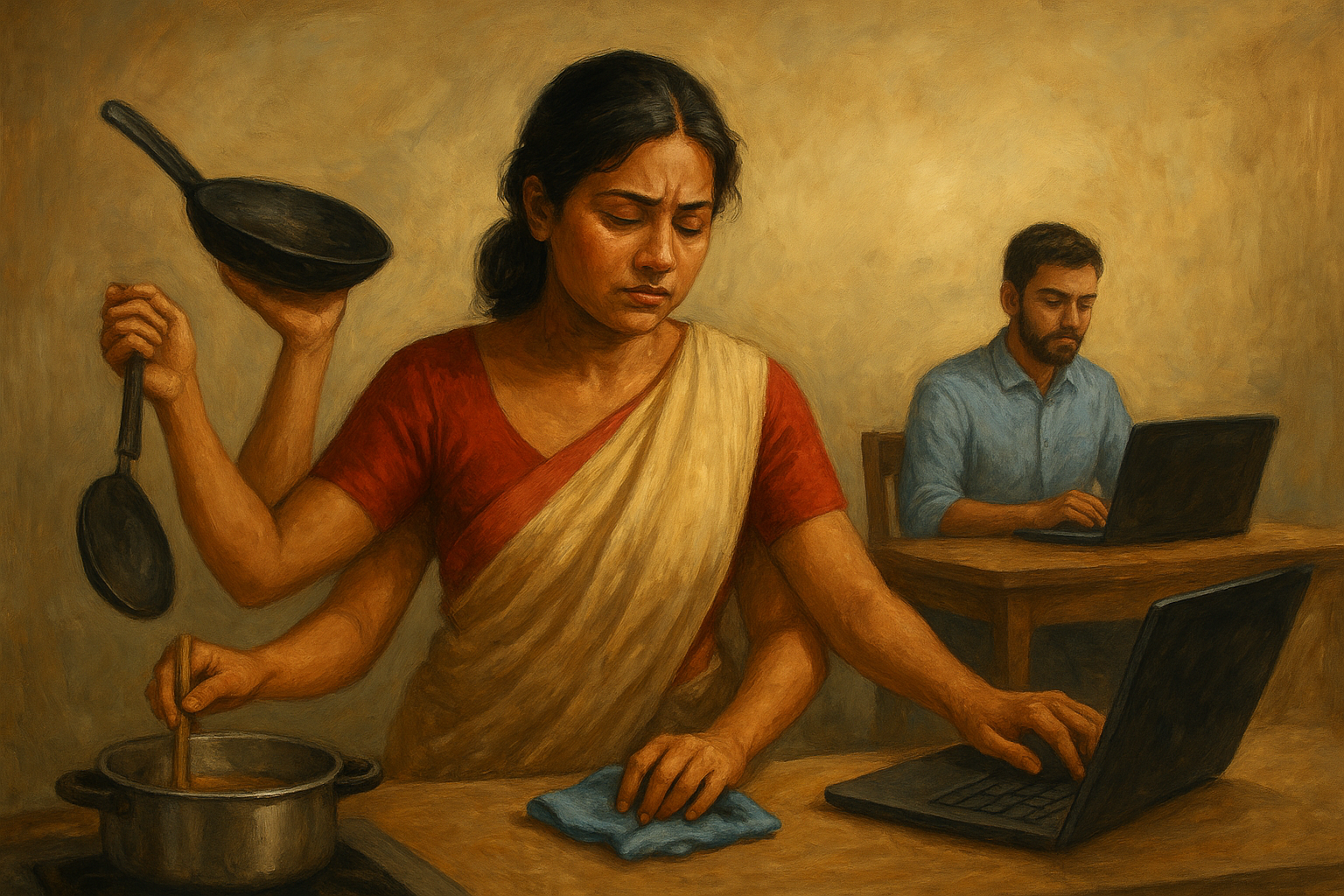
Marriage in India is often described as a partnership two family but no one must understand it is only between two people who promise to grow and care for each other. Whether it works on not entirely depends on two person.
In India, can marriage ever be a true 50-50 partnership? While the idea sounds fair, cultural traditions, family expectations, and financial roles often make it more complicated than it seems.
The Reality of Marriage in India
In India, marriage is rarely just about two individuals—it’s a bond between families. Deep-rooted customs often shape what each partner is expected to give:
- Wedding Costs: The bride’s family still bears most of the financial burden, from wedding expenses to gifts and dowry.
- Household Responsibilities: Even when both spouses work, women often manage household chores, cooking, and childcare almost entirely on their own.
- Financial Balance: Many men expect their wives to share expenses, but few contribute to their wives’ families in return.
This imbalance makes the idea of a “50-50” marriage unrealistic. A woman who already invests emotionally, physically, and financially into the relationship is now expected to contribute equally in income—while her husband often has fewer shared responsibilities.
The Nurturer vs. Provider Divide
Traditionally, women in India have been the nurturers who are caring for children, home, and extended families. Today, they also work and contribute financially. Yet, many men continue to see themselves only as providers.
This leads to questions worth asking:
- If women help support the husband’s family, shouldn’t men support their wife’s family too?
- Why should a woman contribute equally if her husband doesn’t share her family responsibilities?
If a man expects equal financial contribution, then the partnership should also be equal emotionally and socially. Otherwise, fairness doesn’t exist—only convenience.
The Myth of 50-50 Marriage
The concept of a 50-50 marriage assumes both partners can and will contribute equally to everything—expenses, chores, and emotions. But in Indian society, several factors make this difficult:
- Cultural Conditioning: Women are taught to give more, to adjust, to sacrifice, to maintain family harmony.
- Social Expectations: Women are judged by how well they manage relationships and homes; men rarely face the same pressure.
- Financial Reality: Even when women earn well, their contributions are undervalued compared to men’s.
- Often Judged: If women come late from work, they always get judged and labelled as irresponsible but men are considered hard working, responsible and not expected to cook after coming from office.
So, a fairer question might be: Can marriage ever be truly balanced, not just divided equally?
What a Fair Marriage Should Look Like
A successful modern marriage doesn’t have to be 50-50—it has to be fair. That means both partners contribute according to capacity, not rigid equality.
- Shared Financial Effort: Split expenses in proportion to income, not equally.
- Reciprocal Family Support: If a woman supports her husband’s parents, he should also support hers.
- Shared Household Work: Men should cook, clean, and parent too. Domestic work is not a gendered duty.
- Emotional Balance: Both partners should care for each other’s mental and emotional well-being.
- Independence and Respect: If a man expects financial help but refuses to share household, emotional, or family responsibilities, a woman should rethink such a relationship entirely. Entering or staying in a marriage that lacks respect and fairness only leads to exploitation, not partnership.
Cultural Change Begins at Home
For equality in marriage to truly exist, India must challenge old mindsets:
- Families should stop expecting women to bear all wedding and household responsibilities.
- Men must learn to share domestic and emotional labor, not just financial roles.
- Women’s contributions – monetary or otherwise must be valued and respected.
- Society should move away from seeing marriage as a transaction and towards viewing it as teamwork.
Conclusion
A truly equal marriage in India is still rare. Cultural norms and expectations often make women both nurturers and providers, while men are rarely expected to share the same load. True equality means mutual respect, shared work, and fairness across all aspects, not just splitting bills.
If women are expected to contribute equally, men must be ready to stand equally with them in the kitchen, in emotional care, and even in supporting her family. Because equality is not about math, it is about mindset, and many in India still lack it.
Families and individuals must upgrade their thinking. Even those who proudly say they want an educated and independent woman as a wife or daughter-in-law often fail to understand what equality truly means. As long as they expect her to adjust, sacrifice, or give more than she receives, they will continue to hold a patriarchal mindset.
This also applies to parents of daughters. Those who educate and empower their daughters but still expect them to give up their independence after marriage are part of the same problem. Equality will only exist when we stop glorifying sacrifice and start practicing fairness.