
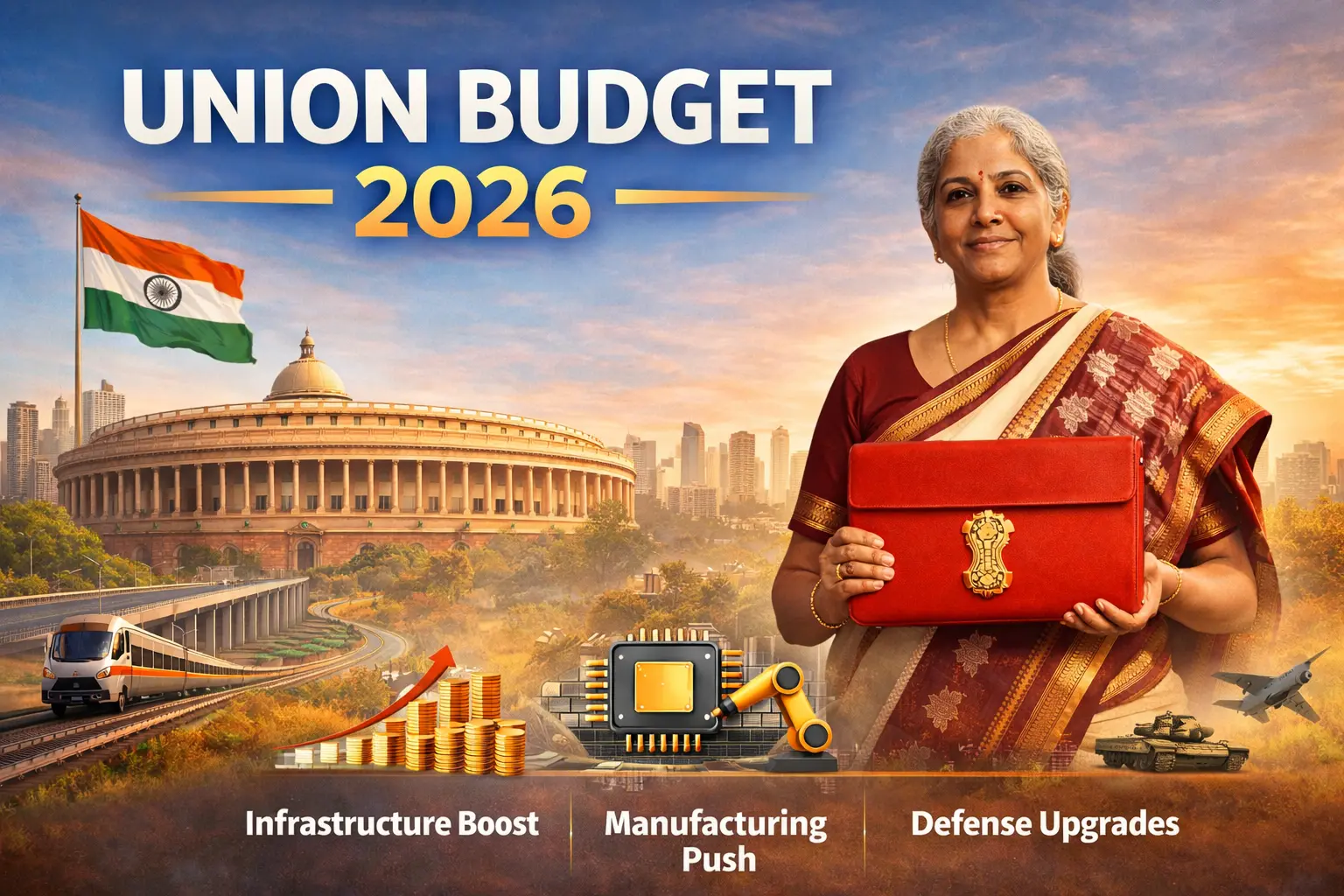
On 1 February 2026, the Government of India presented the Union Budget 2026–27, outlining its economic vision for the year ahead. At a time of global uncertainty and slowing growth in many economies, this budget positions India with a clear focus on stability, long-term growth, and future readiness.
The message from this year’s budget is direct and confident. Growth will be driven through infrastructure, manufacturing, technology, and defense, while fiscal discipline and policy continuity remain firmly in place.
Below is a clear and engaging breakdown of what was announced, why it matters, and how citizens and investors can respond.
Key Highlights of Union Budget 2026
✔ Record Infrastructure Spending
Infrastructure allocation has been increased to ₹12.2 trillion, the highest ever. Roads, railways, urban development, logistics, and public assets remain central to the government’s growth strategy. This sustained capital expenditure is expected to generate employment, boost demand, and strengthen the economy’s foundation.
✔ Fiscal Discipline Maintained
The fiscal deficit target has been set at 4.3 percent of GDP, reinforcing the government’s commitment to responsible spending. Lower deficit levels improve investor confidence, help control inflation, and support long-term economic stability.
✔ Manufacturing and Semiconductor Push
The launch of India Semiconductor Mission 2.0 marks a major step toward self-reliance in critical technology. The focus is on domestic chip manufacturing, design, and innovation, reducing import dependence and strengthening India’s role in global technology supply chains.
✔ Defense Spending Increased
Defense allocation has risen by over 15 percent, supporting modernization, domestic manufacturing, and national security. This also creates opportunities for private companies, startups, and advanced engineering firms linked to defense and aerospace.
✔ Tax Stability and Easier Compliance
There were no abrupt changes in personal income tax slabs, offering predictability for households. The budget emphasized simplified income tax return filing, greater digital adoption, and reduced compliance burden for individuals and businesses.
✔ Healthcare and Social Sector Focus
Healthcare, innovation, and access to services received increased attention. This strengthens public healthcare infrastructure while encouraging private sector participation and long-term human capital development.
What Budget 2026 Means for Citizens
· For Salaried Individuals
Tax stability allows better financial planning. Simplified compliance reduces filing stress and improves transparency for middle-income taxpayers.
· For Families and Students
Higher spending on healthcare, education, and skills development improves access to essential services and supports future employment opportunities.
· For Businesses and Professionals
Ease of doing business reforms, digital processes, and policy continuity improve confidence for expansion, hiring, and long-term investment decisions.
Where Investment Opportunities Are Emerging
Budget priorities often indicate where economic momentum will build over the coming years.
1. Infrastructure and Capital Goods
Sectors linked to roads, railways, construction materials, engineering services, and logistics are expected to benefit from continued government spending.
2. Technology and Semiconductors
With strong policy backing, semiconductor manufacturing, electronics, design services, and high-end technology supply chains present long-term opportunities.
3. Defense and Aerospace
Increased defense allocation supports manufacturers, component suppliers, cybersecurity firms, and defense logistics providers.
4. Clean Energy and Electric Mobility
Support for renewable energy, battery storage, and electric vehicles strengthens prospects in clean energy production, EV infrastructure, and sustainability-focused businesses.
5. Financial Markets
Fiscal discipline supports market stability. Quality companies with strong balance sheets and consistent earnings remain well positioned in both equity and debt markets.
How Investors Should Approach Budget 2026
Budget 2026 provides direction rather than short-term trading signals. Investors should focus on fundamentals and long-term alignment.
- Think Long Term
Budget-driven sectors take years to deliver results. Short-term price movements fade, while long-term earnings growth creates real value. - Diversify across Key Themes
Spreading investments across infrastructure, technology, clean energy, defense, and financials reduces risk and improves portfolio stability. - Focus on Strong Businesses
Companies with healthy cash flows, manageable debt, and credible management are better positioned to benefit from policy support. - Align with Personal Financial Goals
Investments should match individual risk appetite, time horizon, and financial objectives rather than market hype.
Key Takeaway
Budget 2026 offers a clear economic roadmap, not instant returns. Investors who remain patient, diversified, and focused on quality are best positioned to benefit from the long-term priorities outlined by the government.
Final Announcement Summary
The Union Budget 2026–27 reinforces India’s commitment to growth, resilience, and future readiness. With record infrastructure spending, a strong push for manufacturing and technology, fiscal discipline, and policy stability, the budget sets a confident tone for the economy.
For citizens, it brings predictability and improved services. For investors, it highlights long-term opportunities aligned with national priorities.
The direction is clear. Sustainable growth backed by discipline and innovation.
Disclaimer: This article is for informational and educational purposes only and does not constitute financial, tax, or investment advice. Readers should consult qualified professionals before making financial decisions. The author and publisher are not responsible for any investment outcomes based on this content.