
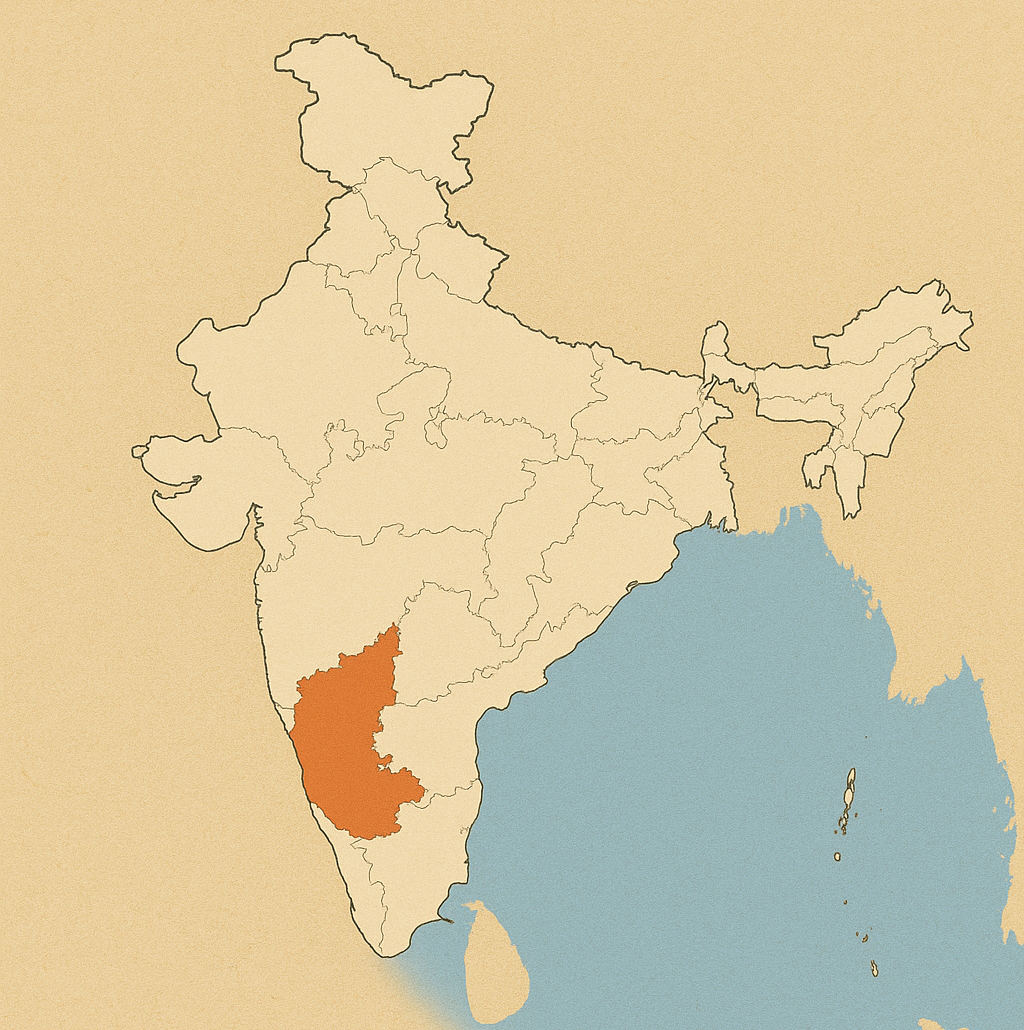
Karnataka is not just a state; it is a living legend of faith, devotion, and divine power. From the thick forests of the Western Ghats to the golden sands of the coast, this land hums with stories that connect humans, gods, and nature.
People often call Karnataka Parashurama Kshetra, meaning the land created by Lord Parashurama. It is also known as the Land of Deities and Snake Gods because almost every village here has its own protector deity or sacred grove. But how did this sacred land come into existence? And why are so many deities worshipped here?
Let’s step back in time and uncover the divine story of how Karnataka became one of the most spiritually rich lands in India.
The Story of Parashurama Kshetra – When the Land Rose from the Sea
In ancient times, Lord Parashurama, the sixth avatar of Lord Vishnu, was born during an age when the world was ruled by arrogant kings. They misused their power and troubled the people. To restore justice, Parashurama fought against them and freed the world from their cruelty.
But after his duty was done, Parashurama wanted peace and penance. He approached the sea and prayed for a pure place where people could live and worship the divine.
It is said that Parashurama threw his axe into the Arabian Sea and commanded the waters to move back. The sea obeyed. Slowly, from beneath the waves, a new land emerged which was fertile, green, and full of divine energy.
That land became Parashurama Kshetra, which today includes the coastal and Malnad regions of Karnataka, Kerala, and Konkan.
When this land emerged, it came with many divine elements like sacred stones, serpents, and energies that would later take the form of Daivas (deities). People who settled there began to worship these forces to protect their homes and farmlands. That is how the tradition of Daiva worship began.
The Land of Deities – Guardians of the Land
Karnataka, especially the Tulu Nadu region, is called the Land of Deities because almost every village, forest, and field has its own guardian. These deities are not distant gods; they are part of the community, protectors of the people and their land.
Some of the most worshipped deities of Tulunadu include:
- Panjurli Daiva – The boar-faced deity who protects farmlands and ensures prosperity.
- Guliga Daiva – Known for justice and punishing wrongdoing, often fierce yet deeply protective.
- Jumadi Daiva – A powerful deity symbolizing both feminine and masculine energies.
- Varthe Daiva – Believed to have emerged from a sacred stone to protect devotees.
- Chamundi Daiva – Fierce and motherly, she represents the divine power of Goddess Parvati.
- Koragajja – The people’s deity, known for compassion, humility, and miracles.
- Kodamanitaya – A heroic figure turned deity, worshipped for courage and fairness.
- Bermer Daiva (Brahma) – One of the oldest deities worshipped since 700 BCE.
- Kallurti and Kalkuda – Twin deities symbolizing protection and justice.
- Rakteshwari – A guardian goddess known for her strength and motherly grace.
Each deity has its own story, its own temple, and its unique rituals. Together, they form a divine network that watches over every aspect of life, from birth and health to crops and justice.
The Mystery of Snake Gods – Guardians of the Soil
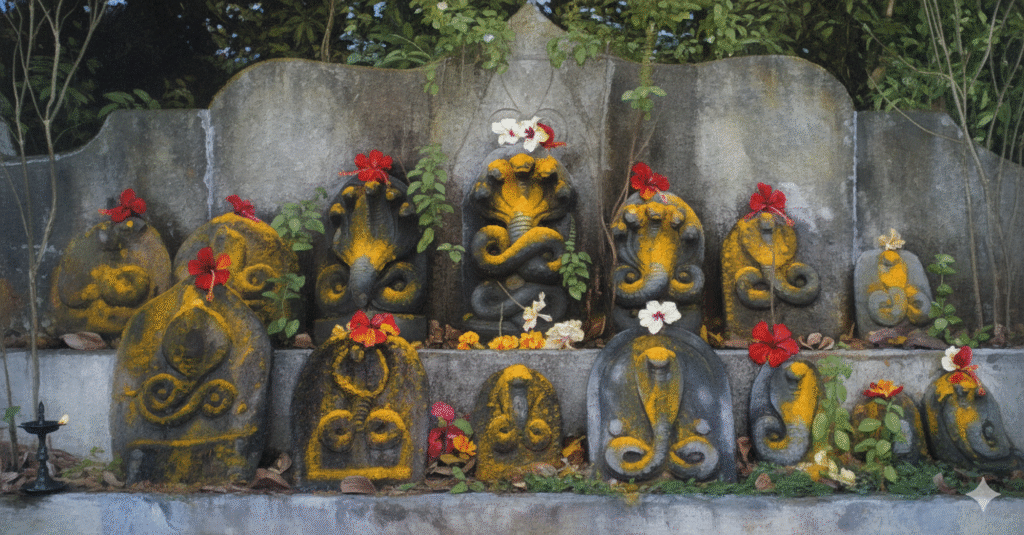
Snake worship is one of the oldest and most beautiful traditions of Karnataka. Known as Naga Devata worship, it is deeply rooted in the belief that serpents are divine beings who guard the land and bring prosperity.
According to local legends, when Lord Parashurama reclaimed the land from the sea, it came with countless serpents. These divine serpents were believed to be protectors of the new land. To maintain harmony, Parashurama taught the people to honor and worship them.
Even today, Nagabana or sacred groves are preserved in many villages. These are small forest patches dedicated to snake deities, where no trees are cut and no construction is allowed. People visit these groves during Naga Panchami, offering milk, turmeric, flowers, and prayers to the snake idols.
The serpents are believed to remove family curses, bless couples with children, and bring good harvests.
Snake worship is not just religious; it shows how deeply Karnataka’s people respect nature. The sacred groves protect biodiversity, and the rituals keep ancient ecological wisdom alive.
The Divine Mysteries of Daiva Worship
Daiva worship, or Bhoota Kola, is one of the most unique cultural and spiritual practices of Karnataka. It is a grand ritual where trained performers take on the divine presence of the Daiva and interact directly with devotees.
The ceremony starts with drums, fire, and chanting. As the night deepens, the performer enters a trance, believed to be possessed by the deity. At that moment, the Daiva speaks through the performer — blessing devotees, solving disputes, and guiding the village.
The people do not see this as drama but as a living dialogue with the divine. Bhoota Kola reminds everyone that the gods are not far away; they are among the people, walking, watching, and protecting.
Each Daiva Kola has its own rhythm, costume, and language. Panjurli’s Kola is fierce and energetic, Guliga’s is intense and commanding, while Koragajja’s is emotional and compassionate.
These ceremonies keep ancient stories alive: Stories that were never written down but passed through generations by word of mouth.
How the Land Became Divine?
When Parashurama’s land rose from the sea, it was not empty. It came alive with divine energy — stones that radiated power, forests that whispered prayers, and rivers that carried blessings.
It is believed that many deities took form through these elements. For example:
- Guliga Daiva was born from a sacred stone found by Goddess Parvati.
- Chamundi Daiva was created from the fierce energy of the goddess herself.
- Panjurli descended as a divine protector after being sent to Earth by Lord Shiva.
These divine presences gave the land its spiritual identity. People built shrines, offered food, and performed rituals to honor them. Some worship their family Daiva, while others worship based on ancestral tradition or the location they live in.
That is why the entire coastal region feels alive with divinity because it is believed every hill, stone, and tree holds the presence of a Daiva.
Why the Tradition Still Lives On
Even in today’s fast-paced world, the worship of Daivas and snake gods continues with the same devotion. These rituals have never been replaced by modernity because they are deeply woven into people’s lives.
- Farmers pray to Panjurli for good harvests.
- Families seek Chamundi’s blessings for protection.
- Villagers call upon Guliga for justice and truth.
- Koragajja listens to people’s personal prayers and fulfills wishes.
Every Daiva Kola is more than a religious act — it is a reminder of the deep connection between humans and the divine. It keeps faith, unity, and respect for nature alive in every generation.
Karnataka – A Living Heritage
What makes Karnataka truly special is that it doesn’t just preserve history; it lives it. The songs of Daiva Kola, the chants in Nagabana, and the folk tales told under banyan trees all remind people of their roots.
In many parts of the world, mythology is studied in books. But in Karnataka, it is lived through rituals, art, and daily devotion.
This is the land where Parashurama created life, serpent gods protect the soil, and Daivas guard the people. Every drumbeat, every dance step, and every offering tells a story that began thousands of years ago and still continues.
Final Thoughts
Karnataka is not just geography; it is sacred history. It is the land born from Parashurama’s axe, blessed by serpent gods, and protected by Daivas who ensure harmony between humans and nature.
From Panjurli to Chamundi, from Koragajja to Kodamanitaya, from Guliga to Varthe, every deity reflects the soul of this region. They represent courage, justice, compassion, and balance: the values that define Karnataka’s culture.
Next time you walk through a Tulu Nadu village, visit a Nagabana, or witness a Daiva Kola, pause for a moment. You are standing on divine ground, the very land created by Lord Parashurama, where gods still dwell among the people.