
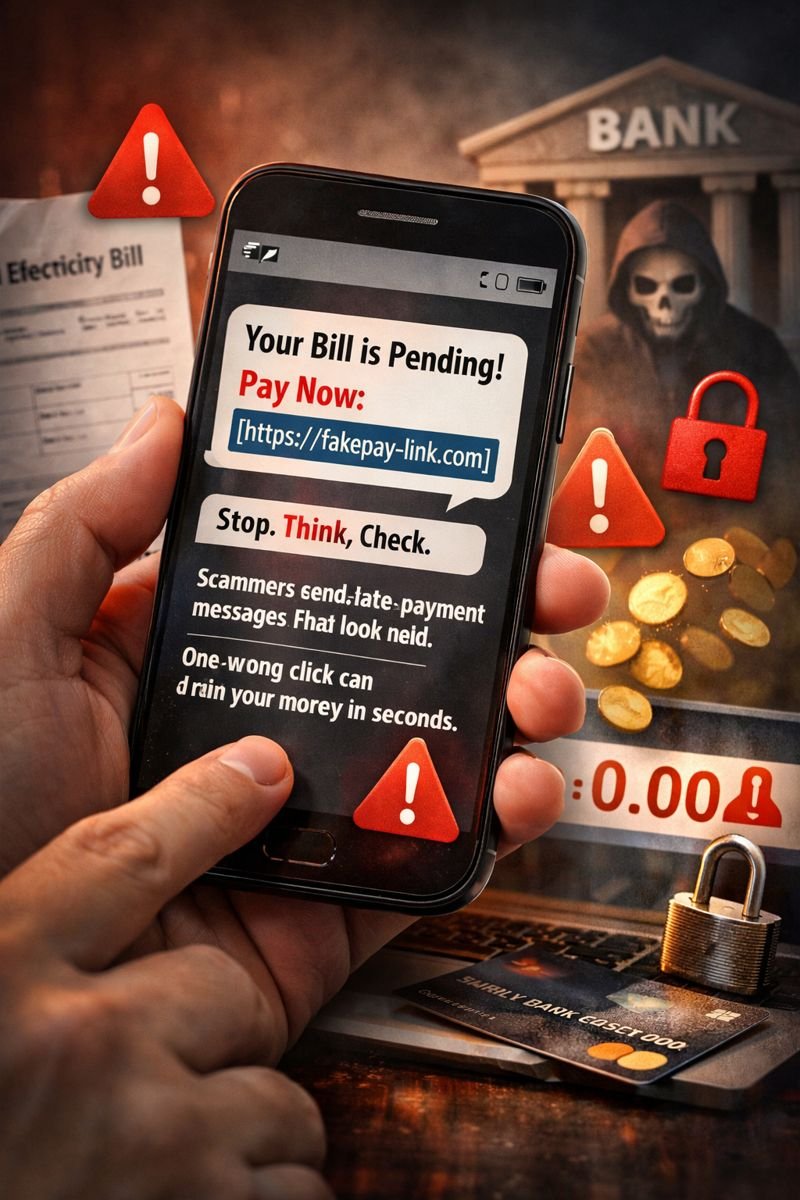
Have you received a message saying your bill payment is pending and asking you to click a link immediately. Did it warn that your service will be blocked today if you do not act now. Many people click such links without verifying them, and within minutes, their bank account can be emptied. What looks like a simple payment reminder can actually be a carefully designed scam.
In today’s digital world, convenience has increased because payments, bills, and services are now delivered instantly through messages. At the same time, cyber fraud has increased sharply because scammers misuse the same communication channels. To tackle this growing threat, the Government of India has introduced a standardized messaging rule using G, T, P, and S codes. This system helps citizens quickly identify genuine messages and stay away from scams.
Why Scam Messages Are Increasing Rapidly
Scam messages are increasing because mobile phones and digital payments are now part of daily life. Fraudsters know that people trust messages that appear official. Therefore, they copy the tone and format of banks, electricity departments, toll services, and other essential providers.
At the same time, scammers rely on urgency. Messages often warn of immediate disconnection or penalties. Because fear weakens judgment, people act quickly and click links without checking authenticity.
Common Types of Bill and Payment Scam Messages
Most scam messages follow predictable patterns because they succeed repeatedly.
One message may claim your electricity or gas bill is overdue and include a payment link. Another may say your bank account or UPI service will be blocked due to verification issues. Some messages pretend to be from toll payment systems, courier companies, or tax authorities.
In every case, the link redirects to a fake website that closely resembles a real one. Once details such as card numbers, OTPs, or login credentials are entered, scammers gain full control. Therefore, awareness is the strongest line of defense.
How Scam Links Actually Harm You
Scam links do not always steal money instantly. Sometimes they collect personal information quietly, which is later misused for repeated fraud attempts. In other cases, malicious software may be installed, allowing scammers to monitor activity or access banking applications.
Because of this, even clicking a suspicious link without entering information can be dangerous. Therefore, avoiding such links is always safer than trying to recover after damage.
Government Introduced Messaging Code Rule
To protect citizens, the Government of India has introduced a mandatory messaging classification system. Under this rule, all registered and legitimate message senders must use a clear code at the beginning of every message. This allows people to instantly understand the nature of the message.
TRAI’s SMS Rules 2025: What Do ‘S’, ‘P’, ‘G’, and ‘T’ in message headers really stands for?
The four official codes are G, T, P, and S. Each code has a fixed meaning. Once people understand these codes, identifying scam messages becomes much easier.
Meaning of Code G
The code G stands for Government messages. These messages are sent only by official government departments or authorized agencies.
Examples include income tax updates, document status notifications, or government scheme information. Genuine G messages do not demand urgent payments through random links. Therefore, any message claiming to be from a government authority without the G code should be treated as suspicious.

Meaning of Code T
The code T stands for Transactional messages. These messages confirm actions you have already completed.
Examples include payment confirmations, ticket bookings, or service activations. Transactional messages are informative and do not pressure users to act. If a message marked T creates urgency or asks for sensitive information, it is likely fraudulent.

Meaning of Code P
The code P stands for Promotional messages. These messages include advertisements, discounts, offers, or marketing campaigns.
Promotional messages are never related to bill payments, penalties, or service disconnections. Therefore, if a message marked P asks for payment or personal details, it is a clear sign of a scam.

Meaning of Code S
The code S stands for Service messages. These messages provide service related updates such as maintenance alerts, usage information, or plan changes.
Service messages focus on information rather than action. Any S message asking for login credentials or payment details should immediately raise concern.

How This Code System Protects You
This system makes decision making easier because you can first check the message code before reading the content. If the code does not match the message purpose, the message is not genuine.
At the same time, it creates responsibility among organizations to follow a uniform structure. Over time, citizens naturally trust coded messages and ignore suspicious ones. Therefore, the success rate of scams reduces significantly.
What You Should Do When You Receive a Suspicious Message
Do not click on links immediately. Read the message calmly and check the code. If the code is missing or does not align with the message content, do not proceed.
Always verify bills or payments through official apps or websites. Also, report suspicious messages to the cyber crime helpline or your service provider. Reporting helps protect others as well.
Role of Awareness and Education
Government rules are effective only when people understand them. Awareness campaigns are essential to teach citizens how message codes work and how scams operate.
Family conversations also matter because elderly people are often targeted. Guiding them patiently can prevent serious financial loss and emotional stress.
Conclusion
Scam messages are increasing because they exploit trust and urgency. However, the Government of India’s messaging code rule using G, T, P, and S gives citizens a powerful tool to stay safe. Staying alert, checking message codes, and avoiding rushed actions can protect your money and peace of mind. A few seconds of caution can prevent long term damage.
Frequently Asked Questions
1. How does the government messaging code rule help prevent scams?
The government messaging code rule helps people quickly identify genuine messages because each message clearly states its purpose. When citizens see G, T, P, or S at the start, they immediately know whether the message is from the government, transactional, promotional, or service related. This clarity reduces confusion and prevents people from reacting emotionally to fake messages that try to create panic.
2. Can scammers still send fake messages using these codes?
Scammers may try to copy the codes, but the rule makes it easier to spot inconsistencies. Genuine messages come from registered senders and follow a fixed format. If the code does not match the message content or the sender looks suspicious, it is a strong warning sign. Therefore, the system reduces scam success even if attempts continue.
3. Why should promotional messages never ask for bill payments?
Promotional messages are meant only for offers, discounts, and marketing communication. They are not connected to payments, penalties, or service interruptions. If a promotional message asks you to pay a bill or click a payment link, it is clearly fraudulent. Understanding this difference helps people avoid falling into common payment related scams.
4. What should I do if I receive a message without any code?
Messages without a G, T, P, or S code should be treated with caution. The government rule encourages standardized communication, so missing codes indicate unverified senders. In such cases, avoid clicking links and verify information directly through official apps or websites. Reporting these messages also helps authorities track scam activity.
5. How can families help elderly members understand this rule?
Families can help by explaining the codes in simple language and encouraging seniors to pause before clicking any link. Writing down what each code means and placing it near their phone can be helpful. Regular conversations build confidence and reduce fear, which scammers often exploit to target elderly individuals.